Solar cells convert light into electrical energy. A complete system still needs appropriate power electronics, protection and, when required, storage.
A solar panel has no engine and no moving blades. Light reaches its surface, and electricity becomes available at its connections. The useful action happens inside semiconductor cells.
Understanding the sequence helps explain why a panel's advertised wattage is not the same as the electricity a household will receive throughout a day.
What happens inside a cell
Photovoltaic cells absorb energy from light. In a suitable semiconductor structure, that energy allows charge carriers to move, and the cell's internal electric field helps separate them. Electrical contacts collect current for an external circuit.
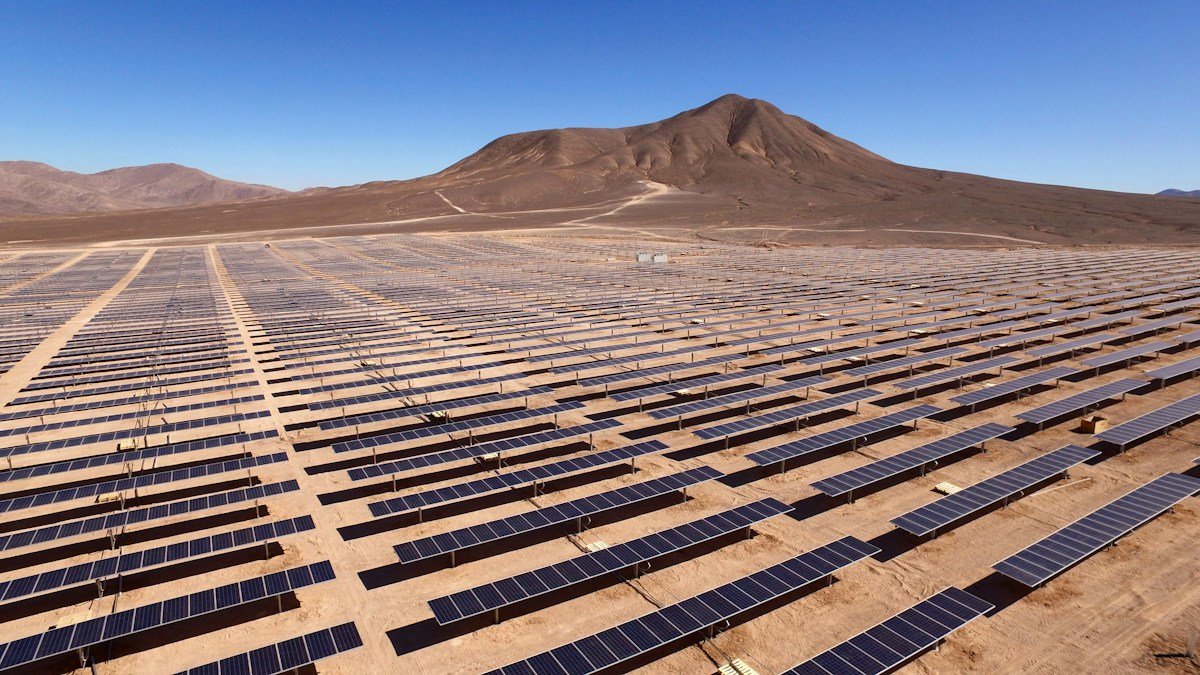
Many cells are connected to form a module, commonly called a panel. Several panels can be combined into an array.
This process uses light. It does not require the panel to become hot first. In fact, high operating temperatures can reduce the performance of many common photovoltaic modules.
From the panel to an appliance
Panels produce direct current. Many household appliances and electricity networks use alternating current, so an inverter is typically part of the system.
The complete installation also includes wiring, mounting, protection and control equipment. A battery may be added when energy needs to be stored for later, but panels and batteries perform different jobs.
A grid-connected system does not automatically provide power during an outage. Backup operation depends on the inverter, isolation and other equipment being designed and configured for it.
Power and energy are different
Watts describe power at a moment. Watt-hours describe energy accumulated over time.
As a deliberately simplified example, a device producing a steady 500 watts for two hours delivers 1,000 watt-hours, or one kilowatt-hour. Real solar output changes during the day, so a fixed two-hour example is a calculation aid rather than a production forecast.
When reading a proposal, distinguish the rated capacity of the array from the estimated daily or annual energy production.
Why actual output varies
Sunlight intensity, panel orientation, shading, temperature and system losses all affect production. Clouds change the available light. A nearby obstruction can shade an area for part of the day.
Installation design matters too. Two systems with the same total panel rating can produce different annual energy in different locations or roof conditions.
Ask which assumptions support a production estimate. A useful estimate should be specific to the location and system, not copied from a best-case promotional example.
Read efficiency in context
Efficiency describes the share of incoming solar energy converted into electrical output under stated conditions. Higher efficiency can be valuable where space is limited.
It is not the only measure of a good system. Reliability, installation quality, shading, usable area and the supporting equipment also matter. A small efficiency advantage cannot compensate for an unsuitable roof layout.
Questions before an installation
Ask how shading was assessed, what the expected energy production assumes and whether backup power is included. Understand maintenance responsibilities and which components are covered by which warranties.
Electrical and structural work should be handled by appropriately qualified people under local requirements. The practical goal is a safe system matched to your usage, not simply the largest number of panels that will fit.
The science begins in a cell. A useful installation depends on everything around it working together.
Sources & further reading
Original explainers and practical examples, with technical background from the sources below. Source links reviewed 2026-10-03.
More context, fewer assumptions. About our editorial approach.